July 31, 2008

Google phone to be announced Monday

By Michal Lev-Ram

Google is expected to unveil its mobile phone plans on Monday. That would end two years of speculation that the Mountain View, Calif.-based search giant has been working on a cell phone or, as has been more recently suggested, a mobile operating system for multiple manufacturers and devices.

A source close to T-Mobile and Sprint confirmed to Fortune that the companies are likely to be the first U.S. mobile operators to carry Google-powered cell phones, which was first reported by the Wall Street Journal. Taiwanese phonemaker HTC has been named as a potential Google partner, which sources close to the company have also confirmed.

The question, though, is whether Google can change the wireless carriers’ long-entrenched ways, in which they insist to a large degree on controlling what phones and software their customers use. Google has publicly stated that consumers should be able to download any software they wish, and use any mobile device with whatever wireless network they prefer. The company has lobbied the Federal Communications Commission to adopt such an approach in an upcoming auction of wireless spectrum. Google has also said it plans to bid in that auction, though it’s not clear what its long-term plans would be if it won.

Even if Google doesn’t become a wireless operator, getting the established carriers to carry phones compatible with the company’s software and services will be a potential boon.

May 17, 2008

Google Confirms Friend Connect

Websites that are not social networks may still want to be social — and now they can be, easily. With Google Friend Connect (see http://www.google.com/friendconnect following this evening’s Campfire One), any website owner can add a snippet of code to his or her site and get social features up and running immediately without programming — picking and choosing from built-in functionality like user registration, invitations, members gallery, message posting, and reviews, as well as third-party applications built by the OpenSocial developer community.

Visitors to any site using Google Friend Connect will be able to see, invite, and interact with new friends, or, using secure authorization APIs, with existing friends from social sites on the web, including Facebook, Google Talk, hi5, orkut, Plaxo, and more.

Friend Connect will work with existing standards such as OpenID, OAuth, OpenSocial, as well as with data access APIs from Facebook, Google, and MySpace. The announcement comes on the heels of similar announcements from MySpace and Facebook (MySpace’s Data Availability and Facebook Connect). As Michael noted on Friday:

The reason these companies are rushing to get products out the door is because whoever is a player in this space is likely to control user data over the long run. If users don’t have to put profile and friend information into multiple sites, they will gravitate towards one site that they identify with, and then allow other sites to access that data.


Erick Schonfeld

March 15, 2008

Intel to Deliver Quad-Core Chips for Laptops

The chip will be released after Intel's Centrino 2 platform, code-named Montevina, is launched in the second quarter. Montevina is an upgrade to the current Centrino mobile platform that puts WiMax and Wi-Fi networking capabilities on a single chip. Montevina will include processors based on the Core 2 microarchitecture and the quad-core notebook processor could be included in the platform.

The initial quad-core laptops will be desktop replacements, weighty laptops that will appeal to gamers and office workers requiring processing power, said Nathan Brookwood, principal analyst with Insight 64

The initial quad-core processors will strain battery life and may first make their way to the high-end gaming and workstation notebooks that require heavy processing power, said Mooly Eden, vice president and general manager, Intel Mobile Platforms Group, earlier this year.

February 26, 2008

Google, SingTel and others to build submarine cable

Web search company Google Inc has agreed to build an undersea cable with five telecoms operators that will link the United States to Japan, and provide the capacity to sustain a surge in Internet traffic between the continents.

Google and the five telecoms companies said in joint statement that the 10,000 km (6,200 mile) undersea fiber optic cable, connecting the United States to Japan, will cost $300 million.

Google's partners in the consortium, dubbed Unity, comprises Bharti Airtel, Global Transit, KDDI Corp, Pacnet, and Singapore Telecommunications.

The cable will provide much-needed capacity to sustain unprecedented growth in data and Internet traffic between Asia and the United States.

"The Unity cable system allows the members of the consortium to provide the increased capacity needed as more applications and services migrate online," said Jayne Stowell, a spokesman for the consortium.

The consortium said it has picked NEC Corporation and Tyco Telecommunications to construct and install the system, which is expected to be ready for service in the first quarter of 2010.

(Reporting by Daryl Loo; editing by Louise Heavens)

February 5, 2008

Yahoo may consider Google alliance: source

Yahoo Inc would consider a business alliance with Google Inc as one way to rebuff a $44.6 billion takeover proposal by Microsoft, a source familiar with Yahoo's strategy said on Sunday.

Yahoo management is considering revisiting talks it held with Google several months ago on an alliance as an alternative to Microsoft's bid, that source said. At $31 a share, Yahoo believes the bid undervalues the company, two sources said.

A second source close to Yahoo said it had received a procession of preliminary contacts by media, technology, telephone and financial companies. But the source said they were unaware whether any alternative bid was in the offing.

In a memo to Yahoo employees on Friday, which was obtained by Reuters on Sunday, Yahoo leaders wrote: "We want to emphasize that absolutely no decisions have been made -- and, despite what some people have tried to suggest, there's certainly no integration process underway."

Few natural bidders exist besides Google that could engage in a bidding war, and Google would be unlikely to win approval from antitrust regulators, some Wall Street analysts said on Friday.

The Wall Street Journal reported on its Web site on Sunday that Google's chief executive Eric Schmidt called Yahoo's chief executive Jerry Yang to offer his company's help in any effort to thwart Microsoft's bid.

Spokesmen for Yahoo and Google declined comment. Google was not immediately available for comment on the WSJ story.

Eric Auchard and Megan Davies

February 3, 2008

California Company Introduces New Mobile Linux Platform

Another mobile Linux platform, this time from Azingo, hit the market on Wednesday, joining an increasingly crowded market of Linux phone software.

Formerly called Celunite, Azingo aims to differentiate itself from the crowd by offering phone makers an entire package, including kernel, middleware, applications, development tools and integration services.

"Mobile Linux has failed because there's a big integration problem," said Michael Mclaughlin, marketing director at Azingo. "People come with piece parts."

For example, companies like Montavista and Wind River make mobile Linux kernels while others like Trolltech, purchased by Nokia just this week, make application development environments. Phone makers typically must buy the different components and then struggle to integrate them. That puts mobile Linux at a disadvantage against some other mobile platforms, like Windows Mobile, which comes complete, he said.

Azingo is offering a complete suite of mobile Linux software but will also help customers integrate different pieces if they choose components from different vendors, said Mclaughlin.

The applications Azingo offers as part of the platform include Web widgets that can deliver information such as weather and traffic, entertainment applications such as video and audio players, and productivity software like e-mail.

Azingo hasn't announced any deals with handset makers planning to use its software. Mclaughlin said the company has been working with some of the well-known vendors and expects handsets running its software to ship in the fourth quarter.

The company isn't the only one offering the market a complete suite of mobile Linux software. A La Mobile has a similar approach, using some of its own software and integrating components from other vendors including Trolltech. GUPP Technologies, a Malaysian company, announced in 2006 that it would use A La Mobile's platform.

Azingo will also compete against Android, Google's high profile Linux-based mobile phone operating platform, which includes an operating system, middleware and applications. Android phones are expected to become available in the second half of this year.

Azingo is a member of the LiMo Foundation, a group founded by Motorola, NTT DoCoMo, Vodafone, Samsung and others to build a mobile Linux platform.

Nancy Gohring, IDG News Service

746,000 for the Jupiter PC

f you're partial to all things bling, then a platinum and jewel-encrusted desktop PC could be just what you're looking for.

Zeus Luxury PCs

Jupiter from Japanese manufacturer Zeus, features a solid platinum case studded with diamonds which, the company claims, replicate astrological constellations. The PC runs on an Intel 3GHz E6850 Core 2 Duo CPU and features 2GB of DDR 2 memory and a 1TB hard drive. The only downside is its price tag - a cool $746,000).

Zeus has also launched a cheaper, gold alternative. It still has diamonds in its case and the same tech spec, but will only set you back a mere $557,284. Both PCs are available now in Japan.

Carrie-Ann Skinner, PC Advisor

Kingston SD Card Hits 16GB

Kingston Technology has introduced a new 16GB SDHC Flash memory card for digital cameras and other devices.

The new entry is the largest-capacity SDHC card Kingston makes. It costs US$231.

Kingston rates the 16GB card as a Class 4 memory card, which means it has a minimum sustained data transfer rate of 4MB per second. It's compatible with SDHC-compatible host devices and writes data in FAT 32 file format.

Kingston said the new card can store up to 7,500 full-resolution images from a 6 megapixel digital camera, or about 5,000 images from an 8MP camera.

Peter Cohen, Macworld

January 29, 2008

MSI Readying Diamondville Low-Cost Laptop

aiwanese laptop computer maker Micro-Star International (MSI) is already hard at work on an ultra-low cost notebook PC based on Intel's Diamondville microprocessor to compete against rival Asustek Computer's Eee PC.

Asustek created the Eee PC laptop to sell in emerging markets such as India. It carries an Intel Celeron processor, weighs less than a kilogram, has a 7-inch LCD (liquid crystal display) and can connect to the Internet wirelessly. The lowest-priced version costs NT$7,999 (US$248).

MSI is working on a similar device for the ultra-low cost notebook market, using an extremely low voltage, low cost microprocessor from Intel called Diamondville. Intel has said it will formally unveil the chip at the Intel Developer Forum in Shanghai this April.

"When Diamondville is ready, our project will be ready," said an MSI executive, speaking on condition of anonymity. He indicated that MSI plans to launch its ultra-low cost notebook in July or August, but declined to offer further details.

Dan Nystedt, IDG News Service

January 23, 2008

Intel Ships First Dual-Core Celeron Processor

Intel is shipping a dual-core Celeron processor, the first low-end desktop processor from the company to ship with two cores.

The 1.6GHz Celeron Dual-Core E1200 processor is based on Intel's Core microprocessor architecture and is manufactured using a 65-nanometer process. The chip has 512K bytes of cache and uses an 800MHz front-side bus to connect with main memory and other components inside the PC.

Intel is selling the Celeron Dual-Core E1200 chips for US$53 each, in quantities of 1,000 units.

The release of the E1200 underscores how prevalent dual-core chips have become. The Celeron family is the low end of Intel's mainstream processor range, below the mid-range Pentium family and top-end Core 2 Duo and Core 2 Quad lines. The release of the Celeron E1200 means Intel now has multi-core processors in each of these product families.

Intel already offers a range of dual-core chips in its Pentium line: the 1.6GHz Pentium Dual-Core E2140, 1.8GHz Pentium Dual-Core E2160, 2GHz Pentium Dual-Core E2180, and the 2.2GHz Pentium Dual-Core E2200. The Pentium Dual-Core chips are priced from $64 to $84, in 1,000 unit quantities

Sumner Lemon, IDG News Service

EBay CEO Meg Whitman to Retire

EBay CEO Meg Whitman is planning to step down from the company she has led for the past 10 years, The Wall Street Journal said Tuesday.

Whitman has been delegating more tasks to deputies over the last few months and is expected to decide on her retirement in the coming weeks, the newspaper said quoting "people familiar with the matter." John Donahue, who leads the company's auction business, is the leading candidate to succeed her, according to the newspaper.

EBay, which also operates the PayPal payment system and Skype Internet telephony service, is due to report earnings for the fourth quarter Wednesday. The quarter includes the traditionally-strong year-end holiday period and estimates see eBay reporting earnings per share of US$0.38.

The company reported a net profit of US$1.1 billion in 2006 on the back of US$6 billion in revenue. For 2007 eBay expects revenue to jump to US$7.6 billion.


Martyn Williams, IDG News Service

Hackers Bring Down Panama Gov't Web Site

PANAMA CITY (Reuters) - Internet hackers crashed the Web site of Panama's National Assembly and briefly posted an American flag there, four months after the legislature elected as its leader a man accused of murdering a U.S. soldier.

Officials at the assembly, declining to be quoted by name, said the site, www.asamblea.gob.pa/, has been down since January 9, when a U.S. flag briefly appeared there. One said the cyber attack almost certainly came from the United States.

Pedro Miguel Gonzalez was elected president of Panama's legislature in September, despite being wanted in the United States for the 1992 murder of U.S. Army Sgt. Zac Hernandez.

His candidature was strongly opposed by Washington, which warned the move would hurt relations between the two countries.

Prominent U.S. Congressional figures including Sen. Hillary Clinton have vowed not to ratify a pending free trade deal with Panama unless Gonzalez is removed from his post.

The Web site crashed on "Martyrs' Day" in Panama, when the country commemorates the deaths of around 20 people in 1964 during clashes between anti-U.S. protesters and soldiers stationed in the Panama Canal Zone, then under U.S. control.

The United States toppled military strongman Gen. Manuel Noriega from power in a 1989 invasion but it handed the canal back to Panama at the turn of the century and its influence in the country has waned in recent years.

(Reporting by Andrew Beatty; Editing by Kieran Murray)


Copyright 2007 Reuters. Click for Restrictions.

Spreading Worm Hits Nokia Handsets

Security vendor Fortinet has uncovered a malicious SymbianOS Worm that is actively spreading on mobile phone networks.

Fortinet's threat response team warned on Monday that the worm, identified as SymbOS/Beselo.A!worm, is able to run on several Symbian S60 enabled devices. These include handsets such as Nokia 6600, 6630, 6680, 7610, N70 and N72 handsets.

The malware is disguised as a multimedia file (MMS) with an evocative name: either Beauty.jpg, Sex.mp3 or Love.rm. Fortinet warned this is deceiving users into unknowingly installing the malicious software onto their phones.

Unlike Microsoft Windows, SymbianOS types files based on their contents and not their extensions, so it is worth noting that recipients of infected MMS would still be presented with an installation dialogue upon "clicking" on the attachment. "Therefore, users could easily be deceived by the extension and unknowingly install the malicious piece of software," warned Fortinet.

After installation, the worm harvests all the phone numbers located in the phone's contact lists and targets them with a viral MMS carrying a SIS-packed (Symbian Installation Source) version of the worm. In addition to harvesting these numbers, the malware also sends itself to generated numbers as well.

Interestingly, all these numbers are located in China so far and belong to the same mobile phone operator. Some of these numbers have been verified to belong to actual customers, rather than being premium service numbers.

Guillaume Lovet, manager of Fortinet's Threat Response Team, EMEA, and the man who conducted the research and discovered this malicious activity, told Techworld that this is not just another 'theoretical' mobile worm that nobody will ever encounter.

"It is actual spreading in the wild," said Lovet, "although numbers are still pretty low." He confirmed that the worm only affects Symbian S60 enabled devices.

Lovet says Fortinet first became aware of the worm after one of his customers (a "large, large mobile operator") provided them with a sample. He says the worm seems to be spreading in the EMEA (Europe, Middle East, and Africa) region, and Fortinet is investigating the Chinese angle, and is in touch with law enforcement officials.

"We really want to know why this worm is doing that (contacting Chinese mobile numbers)," said Lovet. "Perhaps it wants to seed itself pretty aggressively," he speculated.

"When you want to seed or inject worm in the wild, then you may want to seed in high populated areas," he continued. "The Chinese mobile operator concerned is the largest in the world with 300 million users, so maybe the virus writers thought it would be a good idea to go for mobiles in highly populated areas."

The advice from Lovet is simple. "Symbian users must not to say yes to any .jpg, .mp3, or .rm files trying to install themselves on your phone."

Of course, Fortinet says that its FortiClient Mobile automatically detects and removes the Beselo worm.

Fortunately, mobile malware is still pretty rare, but it has made the occasional appearance in the past, despite suspicions that these warnings were simply a way to promote a vendor's products.

A worm that could move from a Symbian phone to a PC was previously reported by security experts F-Secure in September 2006. Then in June last year, a 28-year-old man was arrested in Spain on charges that he created variants of the CommWarrior and Cabir mobile phone viruses.


Tom Jowitt, Techworld

January 21, 2008

Could Software Translate Your Dog's Bark?

BUDAPEST (Reuters) - Hungarian scientists are working on computer software analyzing dog barks that could allow people to better recognize dogs' basic emotions, Hungarian ethologist Csaba Molnar said.

Molnar and his colleagues at Budapest's ELTE University have tested software which distinguishes the emotional reaction of 14 dogs of the Hungarian Mudi herding breed to six situations: When the dog is alone, when it sees a ball, it fights, it plays, it encounters a stranger or it goes for a walk.

"A possible commercial application could be a device for dog-human communication," the scientist told Reuters.

The computer correctly recognized the emotional reaction of the dogs based on their barks and yelps in 43 percent of the cases. People had judged correctly in 40 percent of cases.

Scientists said the software could be improved.

Molnar said the Hungarian scientists' research provided further proof that different types of dog barks convey messages humans can understand even if they had no experience with dogs.

(Reporting by Sandor Peto)

Researcher Claims to Crack Yahoo's Antiscam Filter

A security researcher has claimed that Yahoo's system for blocking automated access to its systems - the CAPTCHA image-recognition system - has been effectively cracked.

Effective Block--Until Now?

CAPTCHA (Completely Automated Public Turing test to tell Computers and Humans Apart) systems are used by Yahoo, as well as Google, Microsoft and others, to stop automated systems from registering web-based email accounts, filling blog comments sections with spam and guessing passwords.

The systems typically present users with a series of characters that can be deciphered by humans, but not by image-recognition software.

Various implementations of automated CAPTCHA-cracking software have been developed, largely by spammers, but Yahoo's CAPTCHA system so far has been ranked as one of the toughest to crack.

For example, several websites selling CAPTCHA cracks for sites such as eBay said Yahoo's system was next to impossible to decode.

This week, however, a programmer using the pseudonym "John Wane" and claiming to be a Russian security researcher posted code for a decoder system which he said can attain an accuracy rate of about 35 percent.

The researcher said Yahoo had been notified about the problem but had not responded.

The decoder could be used by spammers to, for instance, register Yahoo email accounts for spam purposes or to break through anti-spam features, the researcher said.

"It's not necessary to achieve a high degree of accuracy when designing automated recognition software," he wrote. "An accuracy of 15 percent is enough when attacker is able to run 100,000 tries per day."

In a statement, Yahoo said it is aware of attempts being made toward automated solutions for CAPTCHA images, and is working on improvements to the system and other defenses.

Virtual Bait to Capture Data

Last year spammers used a virtual stripper as bait to dupe people into helping criminals crack CAPTCHA codes.

Security researchers warned that a series of photographs shows "Melissa" - no relation to the 1999 worm by the same name - with progressively fewer clothes and more skin each time the user correctly enters the characters in an accompanying CAPTCHA codes.

Forrester said recently that spammers are increasingly using artificial intelligence tactics to get their junk delivered to email users.

The booming image spam pandemic is merely the tip of the iceberg when it comes to spammers' use of AI, Forrester said.

The only way to prevent a repeat of the image spam surge as new models using AI come to light, Forrester analysts said, will be for technology vendors and their customers to abandon the current filtering-heavy approach and instead battle the roots of the problem.

Matthew Broersma, Techworld.com

Microsoft Tests Memory-Making Camera

A digital camera developed by Microsoft is undergoing testing, but you won't see it in any stores soon.

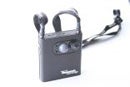
Over the past several years at its research facility in Cambridge, England, the company created a wearable digital camera called the SenseCam. The camera's software is designed to take a low-resolution photo every 30 seconds while dangling from its wearer.

The SenseCam has received increasing attention in the medical field as an experimental tool to help those with memory problems, such as Alzheimer's disease. In 2005 the first trials began, and over time, the SenseCam has been used to help those with more severe memory problems, said Emma Berry, a neuropsychologist at Addenbrooke's Hospital in Cambridge.

Patient Tests SenseCam

Berry has been working recently with a 68-year-old Cambridge woman, "Mrs. F," who was diagnosed 12 years ago with severe memory impairment. For example, if Mrs. F goes to an art exhibit in the morning, she will not remember the activity the next day, Berry said.

Mrs F. wears the SenseCam on a lanyard around her neck when she and Berry do an activity. The SenseCam will take hundreds of images with its fish-eye lens, which provides a wide-angle view. Then, every two days for two weeks, Mrs. F reviews the images.

"At the end of the two weeks, she has a fantastic recollection of the event," Berry said. "What seems to happen is that when she looks at the images, some images don't bring to mind the events at all, but one or two of the images or maybe 10 of the images will bring it all back to her."

A key factor seems to be the quantity of images, since different images and scenes are more significant for some people than others, Berry said. For one person, the color of another person's shoes captured in an image may be enough to trigger wider recollections, she said.

SenseCam can take plenty of images. It has a 1 G-byte SD memory card and can shoot as many as 30,000 640-by-480 pixel images at Video Graphics Array quality. That spec isn't very impressive compared to today's digital cameras, but it's enough to be useful to jog memory, said Steve Hodges, who manages the SenseCam project at Microsoft Research in Cambridge.

"It's remarkable how it appears to trigger your memory for that event," Hodges said. "It seems to bring you back to that original moment."

Tailored Features

SenseCam holds advantages over video recorders, Hodges said. The device is less intrusive for the user to wear, and the snapshots can be viewed at a faster pace later, allowing a person to get to the significant images rather than watching a video clip in real time. SenseCam's battery will last more than a day, and its user must download the images every couple of days.

SenseCam's image-viewing software is easy enough for elderly people to manage and designed to display images in a flip-book fashion, Hodges said. Similar to other photo-viewing software, a person can choose how quickly they want to play back the photos, he said.

The device has other features tailored to its purpose. It will interrupt its 30-second intervals to take a photo when it senses a sudden change in lighting or heat. It's equipped with a passive infrared sensor that can detect when another person is close and can take a photo.

So far, Microsoft isn't working on advancing the hardware specifications and instead is concentrating on engaging the medical community, Hodges said. Microsoft has no plans to commercialize SenseCam, but it has provided US$550,000 in funding for medical research projects using it.

Researchers are still a long way from understanding how memory works. Duke University in Durham, North Carolina, and the University of Leeds in England have a research project underway using the SenseCam to study autobiographical memory, or how people remember events over their lifetime.

"The jury is out over what part of our brains are involved in autobiographical memory," Berry said.


Jeremy Kirk, IDG News Service

January 18, 2008

A self-destructing palm tree that flowers once every 100 years

A self-destructing palm tree that flowers once every 100 years and then dies has been discovered on the Indian Ocean island of Madagascar, botanists said Thursday.

The name of the giant palm and its remarkable life cycle will be detailed in a study by Kew Gardens scientists in the Botanical Journal of the Linnean Society published Thursday.

"It's spectacular. It does not flower for maybe 100 years and when it's like this it can be mistaken for other types of palm," said Mijoro Rakotoarinivo, who works for the London botanical gardens in Madagascar.

"But then a large shoot, a bit like an asparagus, grows out of the top of the tree and starts to spread. You get something that looks a bit like a Christmas tree growing out of the top of the palm," he said.

The branches of this shoot then become covered in hundreds of tiny white flowers that ooze with nectar, attracting insects and birds.

But the effort of flowering and fruiting depletes the tree so much that within a few months it collapses and dies, said botanist Dr. John Dransfield, author of the study.

Dransfield noted that "even for Madagascar this is a stupendous palm and an astonishing discovery."

The world's fourth largest island, Madagascar is renowned for its unusual flora and fauna, including 12,000 species of plant found nowhere else in the world. Indeed 90 percent of its plant species are endemic.

The palm tree, which grows to 66 feet in height and has about 16-foot leaves, is only found in an extremely remote region in the northwest of the country, some four days by road from the capital. Local villagers have known about it for years although none had seen it in flower until last year.

The bizarre flowering ritual was first spotted by Frenchman Xavier Metz, who runs a cashew plantation nearby. After seeing it he notified Kew Gardens.

Puzzling Dransfield is how botanists had missed such a "whopping palm" until now. According to him it is the largest palm species in the country but there appear to be only about 100 in existence.

He also questions how the palm got to Madagascar. The tree has similarities to Chuniophoeniceae palms, however these are only found in Asia, more than 3,700 miles away.

Dransfield suggests the plant has been quietly living and dramatically dying in Madagascar since the island split with mainland India 80 million years ago.

ntel's Classmate PC Goes on Sale in India

Intel's Classmate PC isn't just for students anymore. HCL Infosystems plans to sell a version of the Classmate PC to consumers and businesses in India who want a rugged, low-cost laptop.

Priced at 13,990 rupees (US$356), HCL's MiLeap X laptop uses the same beefy case as the Classmate PC. But HCL -- which signed an agreement with Intel last year to produce the Classmate PC -- insists there is very little in common between the two computers.

"It is a totally different product," said George Paul, executive vice president at HCL Infosystems.

The specifications of the MiLeap X suggest otherwise. Both computers have a 7-inch LCD (liquid crystal display) screen with 800-pixel by 480-pixel resolution, a 900MHz Celeron M processor, Wi-Fi, and 2G bytes of flash memory for storage instead of a hard drive. They also use the same chipset, Intel's 915GMS.

The main difference between the MiLeap X and the Classmate PC appears to be a minor aesthetic change: The MiLeap X's vinyl cover more closely resembles a business folio than the blue covers typically found on the Classmate PC. The MiLeap X also comes with HCL's logo emblazoned below the display.

Paul acknowledged the MiLeap X can be considered a "derivative" of the Classmate PC since both computers use similar technologies, but said significant differences exist between the two products. He did not specify what those differences are.

Nor Badron, an Intel spokesman, confirmed the MiLeap X is based on the Classmate PC.

The basic Classmate PC systems are supplied by Intel and manufacturers such as HCL configure the computers and install software to meet the needs of their customers, Badron said, adding that Intel was "extremely supportive" of HCL's plans to develop a Classmate PC version for consumers and business users.

The MiLeap X gives HCL a start in the low-cost laptop segment, where most computer makers have yet to release products. "It's a quick and easy way of getting into that market," said Bryan Ma, director of personal systems research at IDC Asia-Pacific.

The MiLeap X, which runs a version of the Linux operating system, will go on sale in India on Jan. 26.

Developed in response to the One Laptop Per Child Project's low-cost laptop efforts, Classmate PC was designed for schools in developing countries. The computers were not originally meant to be sold to the general public, largely over fears within Intel that the low-cost laptops would cut into the company's gross margin.

Last year, Taiwan's Asustek was the first to crack open the door for wider Classmate PC sales with the introduction of its Eee PC, which uses many of the same components. Intel expected Asustek to announce a version of the Classmate PC for education customers, but the Taiwanese hardware maker instead declared the Eee PC, which uses the same processor and components as the Classmate PC, would be sold to consumers.

Intel has since embraced low-cost laptops as a product segment, despite continued resistance from some executives inside the company. The company's focus on that market will intensify later this year with the release of Silverthorne, a low-cost, energy efficient processor that will appear in a number of low-cost laptops currently under development.

(John Ribeiro, in Bangalore, contributed to this report.)

German Unions Urge Nokia Boycott

BERLIN (Reuters) - German unions on Thursday called for a consumer boycott of Nokia products to protest against the cellphone maker's plans to close a German plant.

Nokia, the world's top cellphone maker, said on Tuesday it wants to move production to lower-cost regions and said the plant, in the western city of Bochum, is not competitive enough. The company has said it may cut up to 2,300 staff.

"Boycott Nokia!" Dietmar Muscheid, regional head of the Confederation of German Unions (DGB) said in a statement.

"Whoever buys a cellphone today should think about the choice they are making and what catastrophic consequences the company's actions in Bochum will have for thousands of workers," Muscheid, who heads the DGB in the southwest state of Rhineland-Palatinate, said.

The German government has urged Nokia to reconsider the plant closure and has threatened to block any European Union aid for the relocation. The European Commission, however, has said the cellphone maker will not receive any.

Government officials will meet "high-ranking Nokia representatives" this week to discuss the plant's future, the online edition of the Financial Times Deutschland reported on Thursday, citing a deputy economy minister.

"I'm not convinced by the various reasons given by Nokia for closing the plant," Hartmut Schauerte, who will be taking part in the meeting, told the FTD.

Nokia says labor costs in Germany are nearly ten times those in EU-newcomer Romania, where it plans to move most of the production.

(Reporting by Nikola Rotscheroth; Writing by Sylvia Westall; Editing by Quentin Bryar)

Use Camera Phone as a Mouse

Researchers in the U.K. have developed software that loads camera phones with mouse capabilities, allowing users to swivel a camera phone to scroll or move items on a PC screen.

While the software is in its infancy, the technology could enable people to use camera phones to scroll public displays to get further information on products or purchase items like plane tickets.

Communicating with a PC via Bluetooth wireless technology, users can either move the cell phone or use a stylus on the cell phone's screen to also scroll through a computer screen, said Patrick Olivier, an associate professor at Newcastle University. Olivier is working on developing the technology with researchers Nick Pears of York University and Dan Jackson of Newcastle University.

One of the original goals was to interact with larger public displays to, for example, buy movie and train tickets and interact with advertising displays, although the applications of this technology are limitless, the researchers said.

For example, users will be able to scroll through large display screens in a real-estate agency, even though there could be glass window in between, Pears said.

After communicating a cell phone's field of view through a live camera feed to a computer via Bluetooth, the PC establishes the coordinates of its monitor which it sends to a camera phone. Once the camera phone registers the image on the cell phone and recognizes the display coordinates set by the PC through image processing technology, the computer knows exactly what the phone can see, which sets the stage to scroll a PC.

Users can then move the phone or use a stylus on a touch-screen to scroll a PC or move items. The PC and camera phone work together to continuously reposition a PC monitor's coordinates as the phone moves, allowing the cell phone to scroll a PC from any position in a room.

The researchers have developed the software for the Symbian and Windows Mobile OSes for PDAs (personal digital assistants) and camera phones, the researchers said.

While the technology holds promise, it is still under development and multiple issues are being addressed, Pears said.

"The image capture and image processing rate on the cell phone is quite slow and so you can not move the cell phone as quickly as you would like to. This is what we would like to address in our next prototype," Pears said.

Agam Shah, IDG News Service

January 17, 2008

Scientists in Japan have succeeded in controlling a humanoid robot with signals from a monkey's brain.

Scientists in Japan have succeeded in controlling a humanoid robot with signals picked up in the U.S. from a monkey's brain and transmitted across the Internet, they said Tuesday.

The research, which represents a world's first according to the Japan Science and Technology Agency (JST), could be a first step toward giving doctors the ability to restore motor functions in severely paralyzed patients. It can also contribute to the development of robots that move more like humans, JST said in a statement Tuesday.

In the tests, scientists led by Miguel Nicolelis at Duke University in North Carolina trained two monkeys to walk on their legs on a treadmill. The activity of neurons in the leg area of the monkey's brain was recorded while the monkey walked and decoded into predictions of the position of their leg joints.

These predictions were then sent across the Internet to Kyoto where they were used to control a robot. A live video signal of the robot was relayed back to the monkey to provide feedback.

The robot, called CBi for Computational Brain interface, is about the same size as a human at 155 centimeters tall and weighs 85 kilograms. It has 51 degrees of freedom of motion and was developed by JST and Christopher Atkeson of Carnegie Mellon University's Robotics Institute to enable such neuroscience research. The hardware side of the robot was developed by Sarcos, a Salt Lake City robotics company.

The results of the work are groundbreaking, according to JST, although much remains to be done before it can be worked into something useful. As part of the ongoing research, the teams are looking at sending back more complex feedback to the brains of the monkeys.

In recent years, robotics researchers have been increasingly studying how to make the movements of robots more lifelike. Robots like Asimo, developed by car-maker Honda, are being positioned as future companion robots that could either work alongside humans or carry out tasks for them. One of the many issues that needs to be tackled before such a dream can be realized is increasing the mechanical complexity of the robot while simultaneously developing more advanced control systems.

Martyn Williams, IDG News Service

Security Firm Offers $20,000 Prize for New Windows Holes

A security research company is offering US$20,000 for information on undisclosed security flaws in Microsoft's Windows OS.

Digital Armaments, which doesn't list a phone number or a headquarters address on its Web site, is offering the money as part of the "Hacker's Challenge" through midnight EST, Feb. 29. The company is also soliciting for flaws in what they term "Windows Diffuse Applications."

Submitters need to illustrate a working exploit and document it, according to the company's Web site, which is filled with misspelled words.

There's nothing illegal about paying security researchers for flaws, but it does tend to annoy software companies whose products are affected.

Wabisabilabi, based in Switzerland, took the idea of compensating researchers a step further last year by opening a site for them to sell vulnerabilities in auctions. In response to criticism, company officials countered that researchers could sell zero-day vulnerabilities on the black market.

Microsoft, whose security vulnerabilities are generally high profile, advocates that researchers discretely alert it to software problems so users aren't put at risk. Companies generally refuse to pay for software vulnerabilities.

Digital Armaments says on its Web site its research team was founded in 2003, and offices were opened in the U.S. later that year.

In addition to paying money for vulnerabilities, Digital Armaments will also apparently pay in stock or credits that can be exchanged for stock under its Digital Armaments Contribution Program.

Efforts to reach Digital Armaments on Wednesday morning by e-mail were unsuccessful.

Jeremy Kirk, IDG News Service

MacSpeech Unveils Dictate

Longtime Macintosh speech recognition developer MacSpeech has announced a brand new product at Macworld Conference & Expo, called MacSpeech Dictate.

MacSpeech Dictate will utilize some underlying dictation technology from Nuance, developers of Dragon Naturally Speaking for the PC. Nuance provides an exceptional dictation technology engine that lets us focus on what we do best, which is to provide the user experience Macintosh users expect, said Andrew Taylor, president and CEO of MacSpeech.

MacSpeech said this isn't just a new product, but a total rewrite of speech technology on the Mac. The company said that training Dictate usually takes under five minutes with an accuracy level of 99 percent.

Dictate also lets people perform basic navigation of their Mac and control it with their voice using familiar commands like print, cut, copy and paste.

Dictate requires Mac OS X 10.4.11 or higher, and requires Intel-based Macintosh hardware. Coming with your choice of headsets, Dictate will be priced starting at US$199 and is expected to ship by February 15, 2008. Registered customers of iListen will be eligible to purchase MacSpeech Dictate for $99.

MacSpeech is demoing Dictate at its booth during this week's Macworld Expo.

Jim Dalrymple, Macworld

Wednesday, January 16, 2008 6:00 AM PST